Emergency Lighting Servicing & Installation
Emergency-lighting testing, servicing and installation for residential and commercial premises.
No obligation. Prefer to talk? Call 020 8066 2499
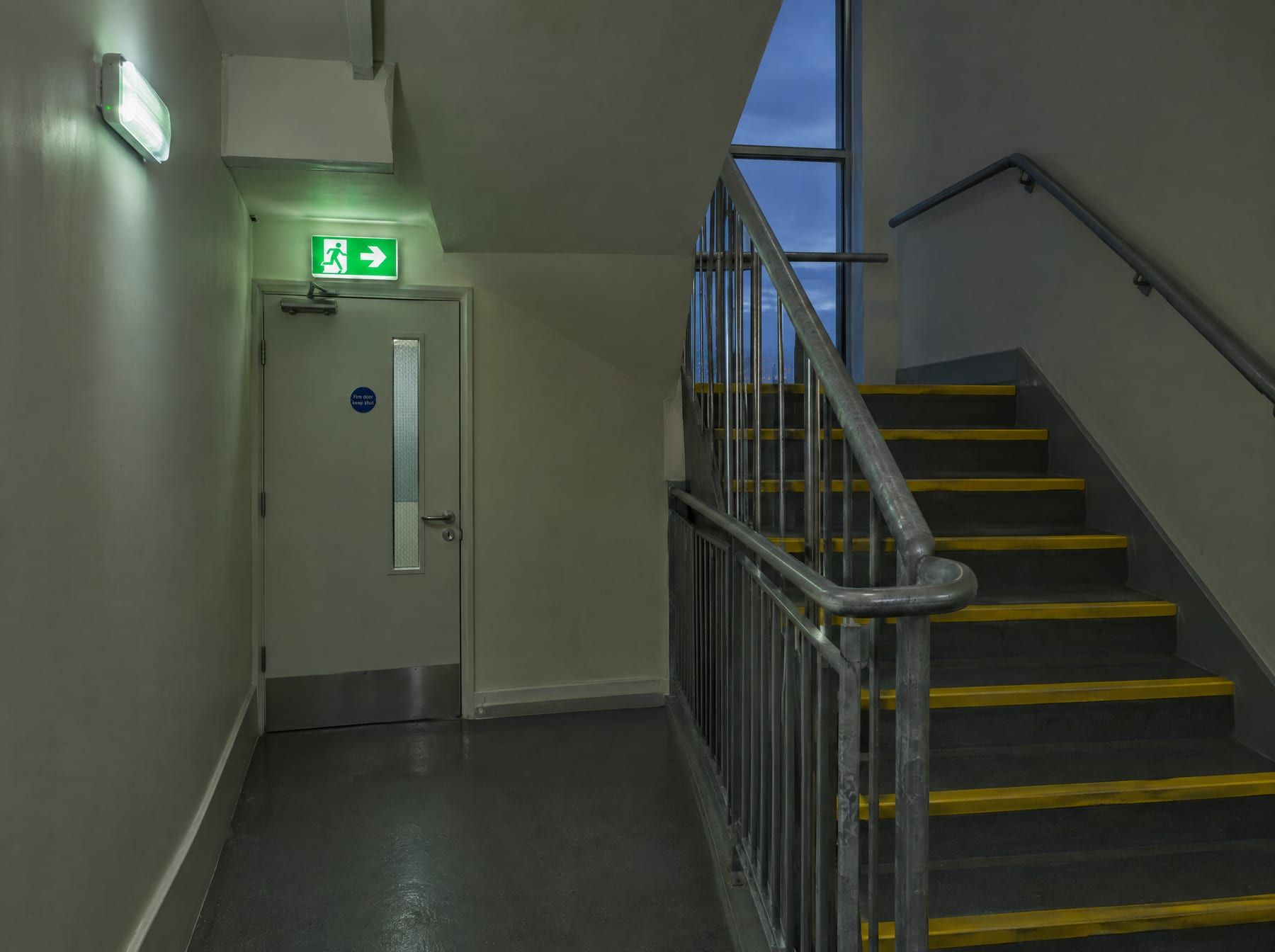
Testing, servicing & installation
T&T Fire Safety provides emergency-lighting testing, servicing, installation and upgrades for residential and commercial premises.
Testing checks the operation and condition of the emergency-lighting provision, with defects recorded for further attention where required.
Testing & servicing
Emergency luminaires
Condition and operation of emergency-lighting fittings.
Operation on supply failure
Confirmation that emergency lighting operates when the normal lighting supply fails.
Battery & charging condition
Charging indicators and battery performance within the agreed test scope.
Escape-route lighting
Emergency lighting provided along escape routes and at relevant changes of direction or level.
Exit signs
Illuminated and emergency exit signage where provided.
Records & defects
Test results and defects requiring further attention.
Work undertaken with reference to the applicable requirements of BS 5266.
Installation & upgrades
New installations
Emergency-lighting installations for new premises or areas requiring additional provision.
Replacements & upgrades
Replacement or alteration of existing emergency-lighting equipment where required.
Test records
Test results and identified defects are recorded, with recommended remedial actions where required.
Property types we work with
View all sectorsOther fire safety services
Get a free quote
Frequently asked questions
How often should emergency lighting be tested?
Testing follows a set cycle of short function tests and a longer full-duration test. The interval and scope are set with reference to the applicable BS 5266 recommendations and the arrangements agreed for the premises: in practice, a brief monthly function test and an annual test for the full rated duration.
What is a full-duration test?
Each emergency luminaire is run on its battery for its full rated duration, usually three hours, to prove it would keep escape routes lit for that long in a real power failure. Because batteries need time to recharge afterwards, the test is planned for a time when the building is quiet.
What happens if an emergency light fails?
The failed fitting is recorded with its location and the likely cause, such as a battery, lamp or charging fault. We recommend repair or replacement, and can usually carry it out on a return visit.
Can existing emergency lighting be upgraded?
Yes. Older fittings can be replaced with LED units, and coverage can be extended where the layout or the fire risk assessment shows gaps on escape routes.
Is emergency lighting required in my premises?
It depends on the building and its escape routes. Most commercial premises, and the communal escape routes of many blocks of flats and HMOs, need it where a route would not be adequately lit by other means. Your fire risk assessment should say whether it is required and where.
Do you provide the test records?
Yes. You receive the test results with any defects and recommended actions, ready to keep with your fire-safety log book.
Useful reading
Guides for responsible persons
7 min read
Do I Need a Fire Risk Assessment?
Who legally needs a fire risk assessment in England: employers, landlords, managing agents, HMOs, blocks of flats and holiday lets.
Read the guide5 min read
How Often Should a Fire Risk Assessment Be Reviewed?
The law says “regularly” and after significant change, not “annually”. What triggers a review, and a practical schedule for flats, HMOs and workplaces.
Read the guide
Emergency Lighting Servicing & Installation in London & the Home Counties
Choose your area for local licensing and fire-safety information.
- Greater London
- Barnet
- Brent
- Camden
- Harrow
- Haringey
- Islington
- Hertfordshire
- Essex
- Kent
- Surrey
- Berkshire
- Buckinghamshire