Fire risk assessments for care homes & healthcare premises
Fire risk assessments for care homes, supported living, clinics and other premises where people may need help to escape.
No obligation. Prefer to talk? Call 020 8066 2499
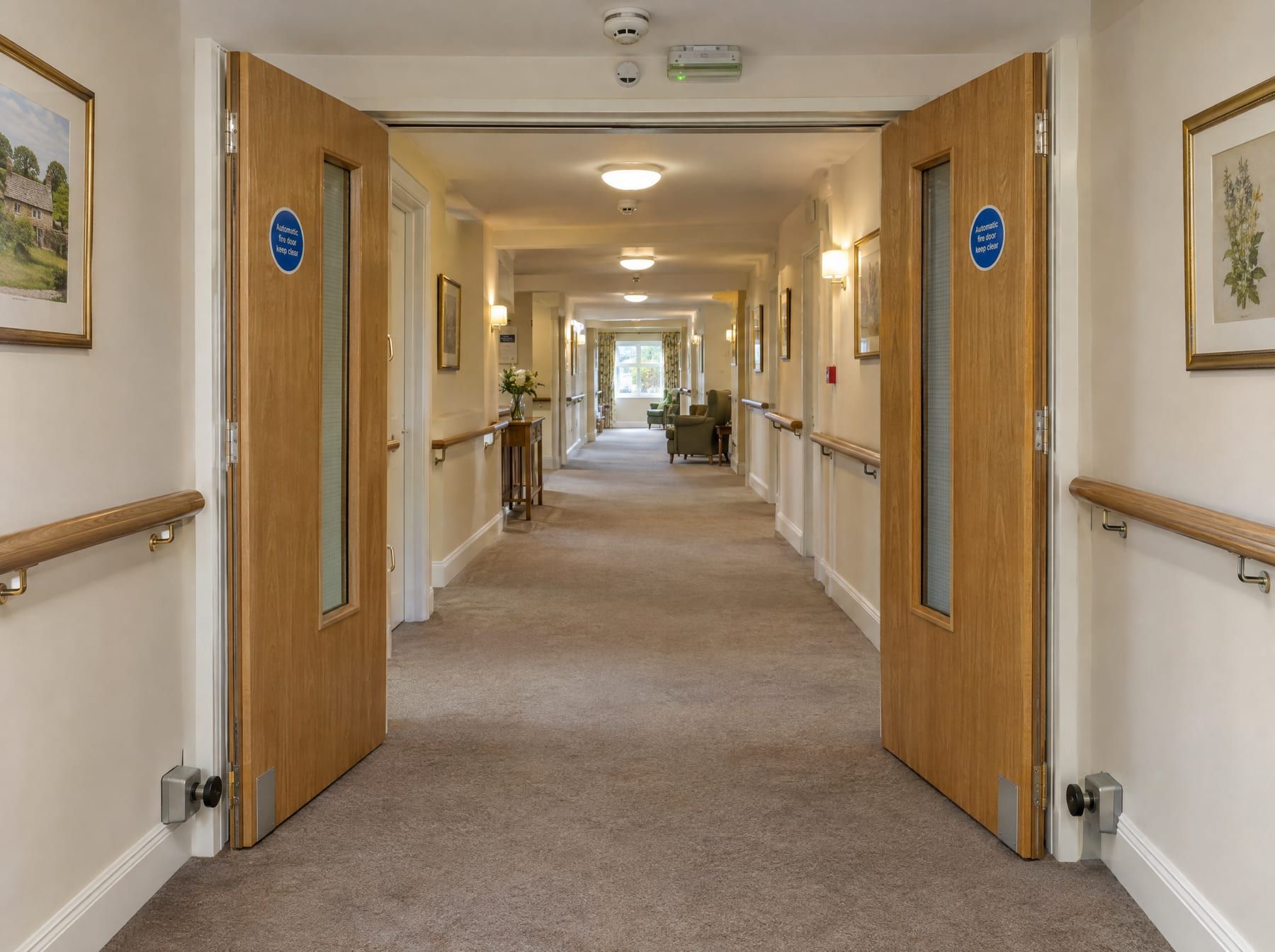
Fire Risk Assessments for Care Homes & Healthcare
T&T Fire Safety carries out fire risk assessments for residential and nursing care homes, supported living schemes, GP surgeries, dental practices and clinics. We work for care providers, registered managers, practice managers and the landlords of care and healthcare buildings.
In these premises many people cannot leave on their own. The assessment focuses on how a fire would be contained, how residents and patients would be moved to safety, and whether the staff on duty could do it.
What we consider
Sleeping risk
Residents asleep at night, often behind closed doors, who may be slow to wake or unable to respond to an alarm.
Dependency and PEEPs
Each resident’s mobility and level of dependency, and whether their personal emergency evacuation plan is current and realistic.
Progressive horizontal evacuation
Whether residents can be moved through fire doors into an adjoining protected area on the same floor, away from the fire.
Night staffing
How many staff are on duty at night and whether that number can carry out the evacuation plan for the worst-case area.
Oxygen and medical equipment
Oxygen cylinders and concentrators, air-flow mattresses, mobility scooter charging and the use of emollient creams near ignition sources.
Compartmentation
The fire-resisting walls, floors and doors that divide the building into protected areas, including any visible gaps around services.
Your fire risk assessment report
Significant findings
The fire risks and existing precautions identified during the assessment.
Prioritised actions
Recommended actions ranked according to priority.
Next steps
Guidance on the findings and any further action required.
Who is responsible in care and healthcare premises
In England, care homes, clinics and surgeries are covered by the Regulatory Reform (Fire Safety) Order 2005. The responsible person is usually the care provider or practice as employer. Where the building is leased, the landlord may hold duties for parts they control, and both must co-operate. The assessment must be suitable and sufficient, recorded in full since 1 October 2023, and reviewed regularly and whenever something significant changes, such as a new resident with higher needs or a change to staffing.
Other fire safety services for healthcare & care homes
Get a free quote
Frequently asked questions
Does the assessment consider individual residents?
It considers residents as a group and checks whether individual PEEPs exist and match the evacuation strategy. It does not replace each resident’s own care and evacuation planning, but it will flag where plans are missing or do not fit the building.
What is progressive horizontal evacuation?
It means moving residents away from the fire into a protected area on the same floor, behind fire-resisting doors and walls, rather than taking everyone outside at once. It relies on good compartmentation and enough staff, so the assessment checks both.
Do you assess night-time staffing?
Yes. We look at the number of staff on duty at night and whether they could carry out the evacuation plan for the area with the highest dependency. Where the numbers do not support the plan, the action plan says so.
Are fire doors on hold-open devices acceptable?
They can be, where the devices release when the fire alarm operates and are tested. The assessment checks how they work. Our fire door inspections look at the doors and closers in detail.
How often should a care home assessment be reviewed?
The law sets no fixed interval, but care settings change often. A review is needed whenever there is a significant change, such as residents with higher needs, building work or new staffing patterns. See our guide on how often an assessment should be reviewed.
Can you work around residents and patients?
Yes. We plan the visit with the manager so that we can access rooms and plant areas with as little disruption as possible. Our guide to what happens during an assessment explains the process.
Useful reading
Guides for responsible persons
5 min read
How Often Should a Fire Risk Assessment Be Reviewed?
The law says “regularly” and after significant change, not “annually”. What triggers a review, and a practical schedule for flats, HMOs and workplaces.
Read the guide5 min read
What Happens During a Fire Risk Assessment?
A step-by-step look at a fire risk assessment: what to prepare, what the assessor checks on site, the questions asked and what the report contains.
Read the guide7 min read
Do I Need a Fire Risk Assessment?
Who legally needs a fire risk assessment in England: employers, landlords, managing agents, HMOs, blocks of flats and holiday lets.
Read the guide